
Why Are Customers in Delhi Struggling to Choose the Right Traditional Necklace Set in 2026?
In Delhi today, I see many customers walking into shops in Chandni Chowk, Karol Bagh, even South Extension, already confused. Instagram reels show heavy bridal sets, online sites show cheap imitation pieces, and local jewellers give different advice. People do not know what is real value.
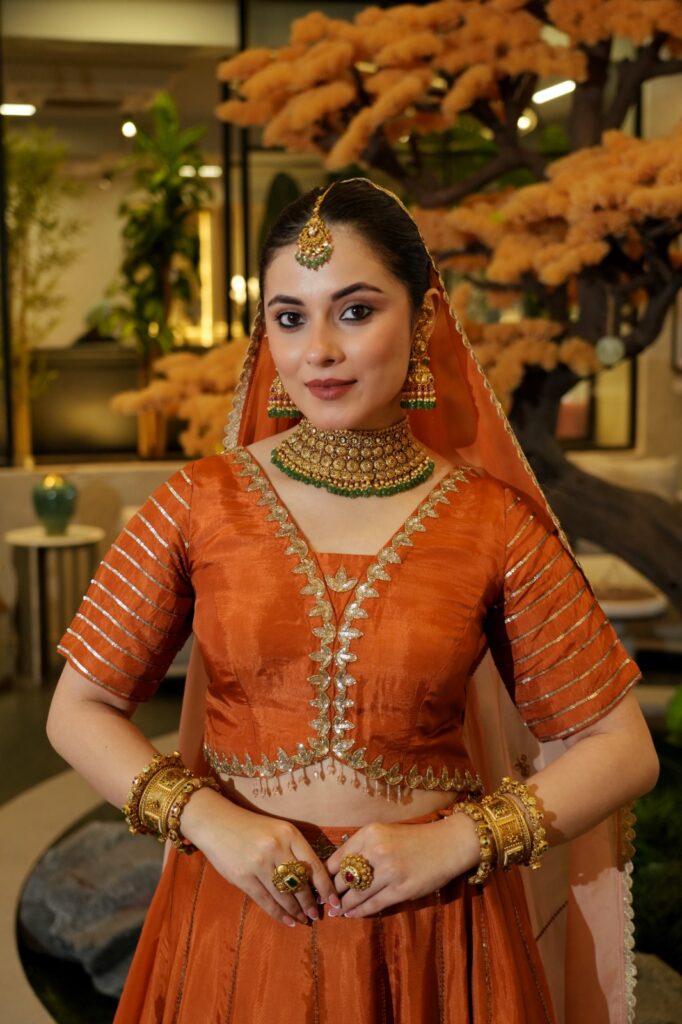
In the last two years at Sunaar The Jeweller, many families from Rohini, Dwarka and Lajpat Nagar told me the same thing. Too many designs. Too many prices. No clear guidance on which traditional necklace set for women works with their saree, wedding budget, or daily wear plan.
Main reasons customers are confused
- Online photos look bigger and brighter than real pieces
- Gold rate changing every week in 2026
- Mix of real gold, gold polish, temple jewellery and imitation
- Shops pushing heavy stock that does not suit customer style
- No clarity on making charges or resale value
Many brides also ask, “This traditional necklace saree combo looks nice online, but will it suit my lehenga and face shape?” That is a real worry.
Real situation from our store
A family from Pitampura bought a heavy traditional necklace gold set online for 3.5 lakh. When they came to us for exchange, the design was outdated and resale was low. We redesigned it into a lighter temple-style necklace and matching earrings. Result was better comfort and they saved money for bangles.
Small jewellery retailers also face confusion. They stock random traditional necklace designs without knowing local taste. Stock stays unsold for months.
Key Takeaways
- Too many options without guidance create confusion
- Online photos mislead about size and quality
- Local taste in Delhi matters more than trends
- Clear advice on gold weight, design use and resale is very important
If you are still comparing, next section will help you understand what actually makes a traditional necklace set valuable today.
What Makes a Traditional Necklace Set Truly Valuable for Today’s Indian Market?
In Delhi showrooms I meet two types of buyers. One wants big heavy look for weddings. Second wants smart investment that can be worn again. Real value in a traditional necklace set today means both beauty and practicality.
At Sunaar The Jeweller, when customers from Rajouri Garden or Dwarka sit with us, we check five things first.
What actually decides value
- Gold purity – 22K or 18K BIS hallmark. Fake polish pieces lose value fast.
- Design usability – Can the traditional necklace saree match work for wedding, festival and family function?
- Craftsmanship – Hand meenakari, temple work, nakshi finish. Clean joints mean longer life.
- Weight vs comfort – Heavy is not always better. Smart weight saves budget.
- Resale and remake option – Real traditional necklace gold sets can be redesigned later.
Quick comparison table
| Factor | Low Value Choice | High Value Choice |
| Gold Purity | No hallmark | BIS 22K hallmark |
| Design | Trendy but one-time use | Classic temple or kundan style |
| Comfort | Very heavy | Balanced weight |
| Craft | Machine rough finish | Fine hand detailing |
| Future Use | No resale | Easy exchange or redesign |
One bride from Punjabi Bagh chose a lighter traditional necklace set for women with detachable layers. She used it again on Karwa Chauth and saved nearly 70k compared to heavy bridal set.
Key Takeaways
- Real value is long-term use plus trusted gold quality
- Classic designs stay relevant in Indian market
- Always check hallmark, making charges and redesign option
- Comfort matters more than size
When jewellery shops and buyers focus on these basics, decisions become easy. In the next section we will look at which traditional necklace designs actually sell best with sarees and bridal wear in Delhi market.
Which Types of Traditional Necklace Designs Sell Best with Sarees, Bridal Wear and Daily Occasions?
In Delhi markets like Chandni Chowk and Lajpat Nagar, I see customers asking one simple question. “Ye saree ke saath kaunsa traditional necklace set best rahega?” After handling hundreds of orders at Sunaar The Jeweller, some patterns are very clear.
Different occasions need different traditional necklace designs. One heavy bridal set cannot solve everything.
Best-selling styles in 2026 Delhi market
| Occasion | Popular Traditional Necklace Set | Why It Works |
| Bridal Lehenga | Temple jewellery with Lakshmi motifs | Rich look, strong resale |
| Silk Saree | Antique gold nakshi necklace | Matches traditional saree border |
| Reception | Kundan layered necklace set | Light but royal feel |
| Daily Festive Wear | Small choker traditional necklace gold | Comfortable and reusable |
| Office Functions | Pearl-gold fusion set | Elegant, not too loud |
Many brides from Rohini and Janakpuri now choose traditional necklace set for women with detachable layers. Same set becomes choker for small events.
Real observation from store
A boutique owner in Karol Bagh stocked only heavy bridal sets. Sales were slow. We suggested adding light temple chokers and kundan mid-range pieces. Within 2 months festive sales doubled because women wanted pieces they can reuse with saree again.
Common pairing tips
- Banarasi saree → Antique gold or temple design
- Kanjivaram saree → Broad Lakshmi necklace
- Pastel lehenga → Kundan or pearl work
- Cotton saree → Small antique choker
Key Takeaways
- Reusable designs sell more than heavy one-time bridal sets
- Temple, kundan and antique gold remain evergreen
- Detachable necklace sets give better value
- Delhi buyers prefer comfort plus tradition
Next we will talk about mistakes many jewellery shops make while stocking these necklace sets, which often leads to dead stock and loss.
Common Mistakes Jewellery Shops in Chandni Chowk, Karol Bagh and Lajpat Nagar Make While Stocking Necklace Sets
When I visit supplier lanes in Chandni Chowk or talk to shop owners in Karol Bagh and Lajpat Nagar, one thing is clear. Many jewellers buy stock based on trend photos, not real customer demand. Later the traditional necklace set pieces sit in lockers for months.
At Sunaar The Jeweller, we learnt this the hard way in our early years.
Biggest stocking mistakes I keep seeing
- Buying only heavy bridal traditional necklace gold sets
- Ignoring light reusable traditional necklace set for women
- No mix for saree customers, only lehenga styles
- Not checking BIS hallmark or consistent gold quality
- Ordering designs without knowing local taste in Delhi colonies
- Overpaying high making charges on trendy pieces
- No option for redesign or exchange
One shop near Rajouri Garden stocked only South Indian temple designs. Local Punjabi wedding buyers wanted kundan. Stock was stuck for 6 months.
What works better in real stores
- 40% bridal, 40% mid-range festive, 20% daily wear necklace sets
- Keep matching pieces for popular traditional necklace saree combos
- Track which designs sell every month
- Offer remake option so customers feel safe
Key Takeaways
- Stock based on customer demand, not Instagram trend
- Balance heavy and light designs
- Local Delhi taste matters more than supplier push
- Track sales data before next purchase
Avoiding these mistakes saves lakhs in dead stock. In the next section, we will see how to compare necklace sets by weight, design, craftsmanship and price in a simple way.
How to Compare Traditional Necklace Gold Sets by Design, Weight, Craftsmanship and Price?
Many buyers in Delhi come to our Rajouri Garden showroom with screenshots and ask, “Same traditional necklace gold set online cheaper hai, why your price higher?” Real comparison needs four checks. Without this, people overpay or buy weak quality.
At Sunaar The Jeweller, we keep a simple comparison sheet for every customer.
Step-by-step comparison table
| Factor | What to Check | Why It Matters |
| Design Use | Bridal only or reusable with saree | More use = better value |
| Gold Weight | Net gold grams without stones | Real investment clarity |
| Craftsmanship | Hand nakshi, meenakari finish, joint quality | Longer life, resale |
| Making Charges | % or per gram charge | Big price difference |
| Hallmark | BIS stamp visible | Trust and resale |
Real example from Dwarka client
A client compared two traditional necklace set for women pieces. One was cheaper by 25k. But gold weight was 6 grams less and making charge higher. After redesign with us, she got better traditional necklace saree match and resale safety.
Common comparison mistakes
- Looking only at design photo
- Ignoring net gold weight
- Not asking making charge breakup
- Forgetting resale or exchange option
Key Takeaways
- Always compare gold grams first
- Craft quality matters more than shine
- Ask full price breakup before buying
- Choose designs you can wear again
When buyers and jewellery shop owners follow this simple method, decisions become calm and clear. Next section I will share real client case studies from Sunaar The Jeweller stores so you can see what worked and what failed in real life.
Real Client Case Studies from Sunaar The Jeweller Stores: What Worked and What Failed
Over the years managing Sunaar The Jeweller showrooms across Delhi areas like Pitampura, Lajpat Nagar and Dwarka, I have seen both smart decisions and costly mistakes with a traditional necklace set. Real stories help more than theory.
Case Study 1 – Bridal Set That Became Daily Wear
Situation: Bride from Rohini wanted a heavy traditional necklace gold set only for wedding.
Problem: Budget tight. Set looked nice but would sit in locker after one use.
Action: We redesigned into detachable layers with matching earrings.
Result: She wore it again for Diwali and cousin wedding. Saved around 80k and resale stayed strong.
Her words later:
“Harshit bhai, good you told truth. I am using this necklace again, paisa vasool.”
Case Study 2 – Dead Stock in Karol Bagh Shop
Situation: Retailer stocked 25 heavy temple traditional necklace designs after seeing Instagram trend.
Problem: Local Punjabi brides wanted kundan and choker styles. Stock stuck for 5 months.
Action: We helped melt 10 sets, remake into lighter traditional necklace set for women pieces.
Result: Festive sale recovered 60% loss within 2 months.
Shop owner told quietly,
“Trend ke chakkar me galti ho gayi. Data dekh ke stock lena chahiye.”
Case Study 3 – Online Purchase Regret
Situation: Family from Janakpuri bought a cheap traditional necklace saree combo online.
Problem: Stones glued badly, no BIS hallmark, resale almost zero.
Action: We checked gold parts, reused metal, created a simple antique choker.
Result: They got wearable piece and learned to check hallmark first.
Key Takeaways
- Detachable designs give long-term value
- Stock based on local Delhi taste, not reels
- Always check hallmark and craftsmanship
- Redesign option saves money
These stories remind us jewellery is not just fashion. It is planning and guidance. Next we will look at realistic pricing of traditional necklace sets in 2026 so buyers and retailers can plan budgets better.
Pricing Guide Table: How Much Should a Traditional Necklace Set Cost in 2026 India?
This is the question every Delhi customer asks in our Pitampura and Lajpat Nagar showrooms. “Harshit bhai, traditional necklace set ka normal price kya hota hai?”
Truth is, price depends on gold weight, design work and making charge.
As of Feb 2026, 22K gold in Delhi is roughly around ₹14,300–₹14,600 per gram depending on market movement.
So necklace price starts from that base.
Realistic Price Guide for 2026
| Necklace Type | Gold Weight | Approx Price Range |
| Light Daily Traditional Necklace Set | 12–18 gm | ₹1.8 – 2.8 lakh |
| Mid-Range Festive Set | 20–35 gm | ₹3 – 6 lakh |
| Heavy Bridal Traditional Necklace Gold Set | 40–70 gm | ₹6 – 12 lakh |
| Temple Jewellery Heavy Set | 70–120 gm | ₹10 – 18 lakh+ |
Price includes gold + making + GST.
In Chandni Chowk market, making charges vary 8%–25% depending on traditional necklace designs complexity. Hand nakshi or meenakari costs more.
Real Example from Dwarka Client
A bride wanted a heavy traditional necklace set for women at 8 lakh. We reduced weight slightly and added detachable layers. Final cost 6.5 lakh but look stayed grand. She later used it again with silk saree.
What Increases Price
- More gold grams
- Handmade temple or kundan work
- Precious stones
- Brand craftsmanship
What Saves Money
- Detachable design
- Antique finish instead of heavy gold
- Reusing old gold
Key Takeaways
- Base price depends mainly on gold rate
- Always ask net gold weight and making charge
- Compare at least 2 shops in Karol Bagh or Lajpat Nagar
- Choose reusable design for better value
If you are a jewellery retailer or buyer, understanding pricing first saves many regrets later. Next we will talk about how Sunaar The Jeweller started and what real lessons shaped our work with traditional necklace sets.
How Sunaar The Jeweller Started – My Real Journey, Clients, Lessons and Team Work
My name is Harshit, business owner at Sunaar The Jeweller. I grew up around jewellery counters in West Delhi. My father handled small repair work near Rajouri Garden. Customers would come with broken bangles, old traditional necklace set pieces, or doubts about gold purity. That is where I learnt listening matters more than selling.
Around 2016 we opened our first proper showroom with a small team of five people. Early days were tough. We stocked heavy bridal traditional necklace gold sets thinking big pieces sell more. They did not move. Customers from Dwarka and Pitampura wanted lighter reusable designs. That mistake taught us to track real buying behaviour.
What shaped our approach
- We guide customers to match necklace with saree and budget
- We show real gold weight and making charges clearly
- We offer redesign from old jewellery
- Team artisans handle nakshi, meenakari and kundan work in-house
One retailer from Lajpat Nagar once told me quietly, “You explained honestly even when it reduced bill. That built trust.” That feedback stayed with me.
Today our team handles bridal consultations, small festive pieces and repair work across Delhi locations. Not everything is perfect. Gold rates change, tastes change. But our goal is simple. Give practical advice so families feel confident choosing the right traditional necklace set for women that lasts years.
Future of Traditional Necklace Set Designs in India: What Will Change in the Next 2 Years?
In Delhi markets like Karol Bagh and South Extension, I already see change happening. Brides from Dwarka and Rohini are asking for lighter, reusable traditional necklace set pieces. Big heavy sets are not fully gone, but buying pattern is shifting.
Trends that will grow in 2026–2028
- Lightweight luxury
Gold prices are high, so buyers prefer lighter designs they can reuse. - Convertible necklace sets
Detachable layers and mix-match jewellery are becoming popular for practical use. - Kundan, polki and temple revival
Classic crafts with modern finishing are trending again with new brides. - Pastel stones and subtle colours
Younger brides want softer tones for reception and saree styling.
At Sunaar The Jeweller, last year nearly 60% brides chose modular traditional necklace set for women designs instead of single heavy sets.
What jewellery shops should prepare for
- Keep more mid-range reusable traditional necklace gold sets
- Offer redesign service from old jewellery
- Stock pieces that match saree and Indo-western outfits
- Show digital try-on photos for customers
Risks to avoid
- Buying only heavy bridal stock
- Ignoring hallmark and craftsmanship
- Following influencer trends blindly
Key Takeaways
- Future buyers want comfort plus tradition
- Convertible and lightweight designs will dominate
- Classic temple and kundan styles will stay evergreen
- Smart retailers who adapt early will grow faster
Jewellery trends always change slowly, not suddenly. If you are planning stock or buying for wedding, think about reuse and comfort first. That decision will stay right even after 2–3 years. Next we will summarise all key learnings before you buy or stock a traditional necklace set.
Key Takeaways Before You Buy or Stock a Traditional Necklace Set
Before finalising any traditional necklace set, pause and check a few basics. Whether you are a bride from Rohini or a retailer in Karol Bagh, these points save money and regret. At Sunaar The Jeweller, we keep this checklist ready for every customer and shop owner.
Quick Checklist for Buyers
- Check BIS hallmark on every traditional necklace gold piece
- Ask net gold weight without stones
- Choose design that matches saree and future functions
- Prefer detachable layers for reuse
- Compare making charges in 2–3 Delhi markets
Checklist for Jewellery Shop Owners
- Stock mix of bridal, festive and daily traditional necklace designs
- Track what sells in local areas like Dwarka or Pitampura
- Keep redesign option from old jewellery
- Avoid buying only trend-based heavy sets
- Train staff to explain price clearly
Simple Comparison Reminder
| Factor | Good Choice | Risky Choice |
| Design | Reusable classic | One-time heavy set |
| Gold | BIS hallmark | Unknown purity |
| Stock Planning | Based on local demand | Based on Instagram trend |
| Budget | Balanced weight | Overspending on making |
Final Learning
A good traditional necklace set for women should feel comfortable, suit saree styling, and keep value after years. Take time, compare calmly, and ask questions. Next section will answer the most common doubts people ask me daily in our Delhi stores.
Frequently Asked Questions About Traditional Necklace Sets
Match the saree colour, neckline and occasion first. In our Delhi stores I guide brides to try 2–3 styles physically. Most realise temple or kundan sets work better than very heavy designs.
Always choose BIS hallmarked 22K or 18K gold. Many families from Dwarka learnt this after online purchases. Hallmark keeps resale safe and gives peace of mind.
For comfort, 20–40 grams works for most weddings. Very heavy sets stay unused. I usually suggest detachable layers so the necklace works again with sarees later.
If pure gold and classic design, both. Antique nakshi or temple styles hold value. Trend-only designs lose resale faster.
Usually 8%–25% depending on craft work. Chandni Chowk handwork costs more. Always ask full breakup before buying.
Yes, many clients from Pitampura bring old bangles or chains. We remake into new necklace sets. It saves money and keeps family gold.
Temple jewellery or antique gold broad necklace suits Banarasi and Kanjivaram sarees. Light kundan chokers work for pastel sarees.
Normally 15–30 days depending on design. Handmade meenakari or nakshi may take 45 days.
Keep balance. In many Delhi locations I noticed 60% demand for mid-range reusable sets. Only heavy stock causes slow sales.
Only if hallmark, weight and return policy clear. Many customers come to us after poor online buys. Better check piece physically once.
If you still have doubts, note your questions and discuss with a trusted jeweller before deciding. Thoughtful jewellery choices always feel better later.
Final Thoughts Before You Decide on a Traditional Necklace Set
Choosing a traditional necklace set in Delhi today needs calm thinking, not hurry. Check gold purity, real use, comfort and resale value. Compare designs in places like Chandni Chowk or Rajouri Garden, then decide what fits your saree, budget and future needs.
From my journey at Sunaar The Jeweller, I learnt that jewellery works best when it matches real life, not just wedding photos. Take time, ask questions, and avoid pressure buying. If you are still comparing options or planning stock for your store, sit with a trusted jeweller, review designs, and move step by step.
A thoughtful choice today becomes a piece your family enjoys for many years.