

Why Is Choosing a Simple Necklace for Saree So Confusing in 2026?
Let me start with a real situation.
A customer walks into our showroom at Sunaar The Jeweller with a beautiful silk saree. She says, “Bhaiya bas simple necklace for saree chahiye. Heavy nahi. Classy lagna chahiye.” Then she sees 20 options. Now she is confused.
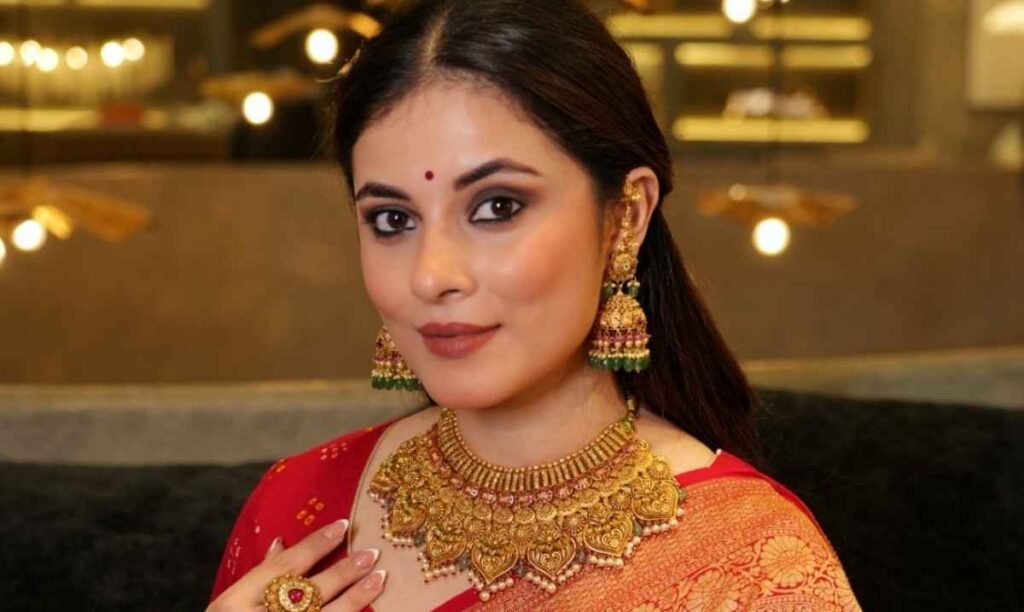
In 2026, confusion has increased because:
- Too many design choices online and offline
- Instagram trends changing every 2–3 months
- Mixing of western minimal and necklace for saree traditional styles
- Budget pressure due to gold price fluctuations
- Customers comparing online screenshots inside the store
Earlier, a simple gold chain with a small pendant was enough. Today, buyers want light weight but premium look. They want traditional feel but modern finish. They want affordable but not “cheap-looking”.
For jewellery business owners, this confusion directly impacts sales. If the collection is not clearly segmented, customers keep comparing and delay decision.
From what I observe daily in our stores, most buyers are not actually confused about design. They are confused about:
- Occasion suitability
- Saree type matching
- Face shape balance
- Future reusability with lehenga or daily wear
When we guide them step by step, decision becomes easy within 10–15 minutes.
What Is Actually Happening in 2026 Buying Behaviour?
Today most women first search on Google:
- “simple necklace for saree”
- “necklace for saree traditional”
- “necklace for lehenga simple”
- “light necklace for girls”
They save screenshots. Then they visit store.
If the store owner cannot clearly explain:
- Why this necklace suits silk saree
- Why this works better for chiffon
- Why this will also match lehenga
The sale becomes weak.
Real Store Observation from Our Team
In one of our showrooms, we tracked customer behaviour for 3 months.
We noticed:
- 65% customers initially ask for “simple”
- 40% finally purchase slightly detailed design
- Most decisions are based on neckline and saree border work
That is when we changed display strategy. We grouped collections as:
- Office wear simple necklace for women
- Festive necklace for saree traditional
- Bridal light layering necklace for lehenga
Immediately, decision time reduced and conversion improved.
Key Takeaways
- Confusion is not about jewellery. It is about clarity.
- Customers need guided matching, not more options.
- In 2026, structured presentation matters more than stock quantity.
- Simplicity today means elegant, not plain.
If you are a jewellery retailer or manufacturer reading this, understand this clearly. A simple necklace for saree is not a product problem. It is a positioning and guidance problem.
And once that is solved properly, everything becomes smooth for both buyer and seller.
What Types of Simple Necklace for Saree Actually Work in Real Life?
In practical store experience, not every “simple” design actually works with a saree. Some look good in photos but flat in real life.
Inside Sunaar The Jeweller showrooms, we classify simple necklace for saree into working categories based on actual customer feedback.
Here is a clear comparison:
| Type of Necklace | Works Best With | Why It Works | Reusability |
| Thin Gold Chain with Small Pendant | Office saree, cotton, chiffon | Clean neckline balance | Daily wear |
| Short Temple Motif Necklace | Silk, Kanjivaram | Traditional but not heavy | Festive use |
| Pearl Single-Line Necklace | Pastel sarees | Soft elegance | Party + lehenga |
| Minimal Polki Necklace | Wedding guest saree | Light shine without bulk | Lehenga + suits |
| Sleek Choker (Lightweight) | Plain saree | Creates structured look | Indo-western |
What usually fails:
- Very thin chain with heavy border saree
- Overly wide choker on short neck
- Too many layered designs for small face
We guide customers by first checking saree fabric and blouse neck. Decision becomes simple.
Key point: A necklace for saree traditional should enhance the saree, not compete with it.
In 2026, smart curation works better than big variety.
How to Match Necklace for Saree, Lehenga, and Daily Wear Without Overdoing It?
This is where most people go wrong.
They buy one necklace thinking it will work everywhere. Then either it looks too heavy for daily wear or too simple for wedding.
Inside Sunaar The Jeweller, we follow a simple 3-step matching logic before suggesting any necklace for saree or necklace for lehenga.
Step 1: Check Fabric and Work
- Heavy silk or Banarasi → slightly structured traditional necklace
- Light chiffon or georgette → thin chain, pearls, or minimal polki
- Plain saree → can carry choker or small layered look
If fabric is already heavy, jewellery should balance it. Not fight with it.
Step 2: Neckline Matters More Than You Think
- Deep blouse → medium length necklace
- High neck blouse → choker style
- Boat neck → short but detailed necklace
Many buyers ignore this. Then something feels “off” but they cannot explain why.
Step 3: Think Reusability
If customer says she wants one necklace for women for multiple outfits, we suggest:
- Mid-length minimal design
- Not too bridal
- Not too plain
| Occasion | Safe Choice | Avoid |
| Office Saree | Thin pendant chain | Heavy temple work |
| Wedding Guest | Light polki or pearls | Bridal full set |
| Lehenga Function | Sleek choker + studs | Oversized collar |
Common Overdoing Mistakes
- Mixing heavy earrings + heavy necklace
- Layering when saree already has heavy zari
- Choosing trendy pieces that fade in 6 months
In real showroom interaction, once we show customers mirror comparison side by side, clarity comes instantly.
Key Takeaways:
- Balance > volume
- Neckline first, trend second
- Reusability saves money
When guidance is practical, customers do not feel confused. They feel confident. And that confidence is what actually completes the look.
What Mistakes Do Jewellery Sellers and Buyers Commonly Make?
This is an important section. Because most confusion around simple necklace for saree is not design related. It is mistake related.
After handling multiple showrooms under Sunaar The Jeweller, I can clearly say both buyers and sellers contribute to wrong decisions.
Mistakes Buyers Often Make
- Buying only based on trend reel or influencer look
- Ignoring blouse neckline
- Choosing heavy necklace for girls just because discount is good
- Not checking weight vs comfort for long functions
- Assuming one necklace will work for saree, lehenga, and daily office wear without compromise
Many customers realise the mistake only after 1–2 functions when jewellery stays inside locker.
Mistakes Jewellery Retailers Make
- Showing too many designs at once
- Not asking about saree fabric before suggesting
- Pushing heavy margin products instead of suitable ones
- Poor display segmentation
- Copying competitor designs without understanding local demand
In some markets, I have seen stores stocking 200+ necklace for saree traditional designs but no clear categorisation. Customer gets tired. Decision fatigue increases.
Small Real Example
One retailer near our branch location once kept only heavy temple jewellery thinking traditional sells more. But actual local demand was lightweight festive pieces. Stock turnover was slow.
After analysing customer queries and redesigning display:
- 30% increase in fast-moving pieces
- Reduced dead inventory in 4 months
Key Takeaways
- More stock does not mean more sales
- Wrong guidance reduces trust
- Trend chasing without understanding customer lifestyle is risky
- Comfort and balance always win
In 2026 market, smart curation and honest advice matter more than pushing products. Long-term trust brings repeat customers. Shortcuts never sustain in jewellery business.
How Should Jewellery Businesses Price and Position Simple Necklace Collections?
Pricing a simple necklace for saree is not only about gold rate. It is about clarity.
Many jewellery shops mix everything in one display and one price bracket. Customer gets confused. Some feel it is expensive. Some feel it is too basic. Positioning matters more than most retailers realise.
At Sunaar The Jeweller, we price and present collections based on usage intent.
Step 1: Segment by Purpose, Not Just Weight
| Collection Type | Ideal Customer | Approx Pricing Logic | Why It Sells |
| Daily Wear Necklace for Women | Office going, regular users | Lower weight, simple making | High repeat demand |
| Festive Necklace for Saree Traditional | Wedding guest, functions | Moderate weight + design work | Emotional buying |
| Multi-Use Necklace for Lehenga | Young buyers | Balanced weight + flexible style | Value perception |
When we clearly separate these in-store and online, decision time reduces.
Step 2: Be Transparent About Pricing
In 2026 buyers check:
- Gold rate today
- Making charges
- Weight difference
- Exchange policy
If you hide making charges, trust drops instantly.
We openly explain:
- Gold value
- Making cost
- Stone cost if any
- Buyback terms
Customers appreciate clarity. Many come back after 2–3 weeks because they felt comfortable.
Step 3: Avoid Common Pricing Errors
- Overpricing light designs thinking “simple means premium”
- Undervaluing minimal pieces
- Not updating tags with current gold rate
- Offering unrealistic discounts
Discount gimmicks damage brand credibility long term. Honest pricing builds repeat buyers.
Real Case Study from Our Store
Situation:
A mid-range jewellery retailer was struggling to sell lightweight necklace for girls collections.
Problem:
All designs were placed inside bridal section. Customers perceived them as expensive wedding pieces.
Action Taken:
We helped them restructure display into:
- Daily wear
- Festive wear
- Wedding wear
Pricing boards were simplified. Making charges were clearly mentioned.
Result:
Within 3 months:
- 25% faster stock rotation
- Better impulse purchases
- Fewer negotiation arguments
One customer even said quietly, “At least here everything is clear. No confusion.”
That feedback matters more than big marketing.
Key Takeaways
- Position by purpose
- Be transparent
- Remove discount drama
- Make it easy to understand
When pricing is clean and positioning is clear, simple necklace collections become strong revenue drivers without pressure selling.
And in 2026 market, calm clarity always beats loud offers.
Real Case Studies: What Changed When Stores Improved Their Necklace Strategy?
Theory sounds good. But let me share what actually changed on ground when stores improved their simple necklace for saree strategy.
Case Study 1 – Stock Was Good, Sales Were Slow
Situation:
A jewellery store owner had decent collection of necklace for saree traditional. Designs were beautiful. Location was good.
Problem:
Customers kept browsing but not buying. Decision time was long. Staff kept showing more and more options.
Action Taken:
We studied customer flow for 2 weeks. Then we:
- Reduced display clutter
- Created 3 clear sections: Daily, Festive, Wedding
- Trained staff to ask saree type first
- Limited showing to 5–6 curated pieces per category
Result (within 3 months):
- 32% faster decision time
- 18% increase in lightweight necklace sales
- Fewer “I will come later” responses
One regular customer said, “Now it feels easy to choose here.”
That small sentence showed clarity worked.
Case Study 2 – Young Buyers Wanted Reusable Pieces
Situation:
Another store had strong bridal sales but low conversion in necklace for girls and young working women.
Problem:
Collection was either too heavy or too basic. No middle option for saree + lehenga reuse.
Action Taken:
We introduced:
- Mid-length minimal polki pieces
- Lightweight chokers
- Styling demo on mannequin with saree and lehenga both
We positioned them as “multi-use”.
Result (within 4–5 months):
- 40% growth in 22–30 age group sales
- Better add-on purchases
- Increased repeat visits
A college-going customer told the store owner, “This I can wear at cousin wedding and also next year function.”
That is practical buying mindset in 2026.
Case Study 3 – Pricing Transparency Reduced Negotiation
Situation:
Store was losing margin because customers kept negotiating heavily.
Problem:
Making charges were not clearly explained.
Action Taken:
We helped them create simple pricing boards:
- Gold value
- Making charge percentage
- Stone cost if applicable
Staff started explaining calmly instead of defending price.
Result (within 2 months):
- Negotiation reduced
- Trust improved
- Higher conversion without discount drama
Short Real Testimonials
“Now customers are not confused. They understand what they are buying.”
— Retail store owner
“Earlier we used to show 15 pieces. Now 5 pieces are enough.”
— Sales executive
“Light necklace collection is finally moving.”
— Young jewellery entrepreneur
Key Takeaways
- Curation beats crowding
- Clear positioning increases trust
- Showing less can sell more
- Transparency reduces stress
Improving necklace strategy is not about adding stock. It is about guiding decision properly.
And once that changes, everything else slowly aligns.
Sunaar The Jeweller – My Journey as Harshit Business Owner
My name is Harshit. I run Sunaar The Jeweller along with a committed team across multiple showroom locations. I did not enter jewellery business just for trading gold. I entered because I genuinely enjoy understanding how people choose jewellery and why they hesitate.
In the early years, I also made common mistakes. I stocked heavy necklace for saree traditional pieces thinking traditional always sells. But gradually I realised buying behaviour was changing. Young women wanted lightweight necklace for women that looked elegant but did not feel overdone.
We started observing patterns carefully.
Instead of asking “What is your budget?”, we began asking:
- Which saree are you wearing?
- For which function?
- Will you reuse this with lehenga?
- Do you prefer subtle or statement?
That small shift changed our sales quality.
How We Actually Work
Inside our team:
- We review fast-moving designs every quarter.
- We analyse which necklace for saree types are staying unsold.
- We adjust collection based on customer lifestyle, not only trend.
In the last few years, I noticed:
- 60% buyers prefer reusable jewellery.
- Heavy bridal-only pieces move slower unless wedding season.
- Clear explanation builds long-term loyalty.
One customer once told me softly, “Here nobody is pushing. That is why I trust.”
That line stayed with me.
Real Learning From Clients
A retailer we guided was struggling with dead stock. After restructuring display and reducing overdesign pieces, their simple necklace category started moving within one festive cycle.
I also learnt that honesty about pricing builds stronger repeat base than loud offers.
Our Working Philosophy
- Guide first, sell second.
- Explain clearly.
- Never oversell heavy design if not required.
- Focus on comfort and long-term usability.
Jewellery is emotional. It is not just metal weight.
At Sunaar The Jeweller, we try to make sure when someone buys a simple necklace for saree, they feel confident wearing it even after 2–3 years.
And honestly, that satisfaction matters more than one-time sale.
What Trends Will Shape Simple Necklace for Women in the Next 1–2 Years?
Let’s talk about what I am seeing firsthand in 2026 as Indian buying preferences continue to evolve.
When I discuss with customers at Sunaar The Jeweller and study footfall data across our showrooms in Delhi, Noida, and Ghaziabad, a few clear trends have shown up. These will shape how jewellery sellers plan their simple necklace for saree and daily wear collections in the coming years.
1. Reusable First
The biggest shift I have observed over the last year is that buyers are less interested in one-time use pieces. They want necklaces that work with:
- Sarees
- Lehenga
- Kurtis and indo-western outfits
This means minimal polki, sleek chains with design accents, and lightweight chokers are gaining traction.
2. Comfort Over Flash
Gone are the days when heavier was assumed better. A bride’s sister or a working woman today will reject a heavy necklace after trying 2–3 outfits. Comfort matters. If it feels weighty, they will leave it and buy something lighter. Our team has seen multiple walkouts because a design looked beautiful but felt heavy.
3. Local Design Nuances Matter More
Customers in Shahdara, Lajpat Nagar, and other Delhi hubs ask for regional influences. Someone wearing a Banarasi silk from Lucknow may prefer temple motif accents. A girl attending a metro city reception may want sleek, modern finishing. This mix of regional style with simplicity is gaining preference.
4. Personalised Touch
We are also seeing more requests for slight personalisation — small gemstone choice, slight tweak in pendant shape, subtle initials, etc. Not big custom jobs, but light custom tweaks that make a piece feel “mine”.
5. Sustainable and Transparent
Buyers, especially younger ones, care about transparent pricing and ethical sourcing. They ask:
- Is this certified?
- What is the making charge?
- How old is this design?
These questions impact trust and decision speed.
What Sellers Should Prepare For
- Stock more versatile pieces instead of one-season designs
- Train staff to suggest based on outfit type first
- Embrace clear pricing and quality demonstration
- Offer light customization at point of sale
Key Takeaways
Trends will shift, but these staying factors are strong:
- Reusability
- Comfort
- Regional styling relevance
- Transparent pricing
If you adapt your simple necklace for saree and women collections around these living patterns today, you will stay ahead in 2027 and beyond.
Markets change fast. But fundamentals of comfort, clarity, and real use never go out of style.
How to Decide the Right Necklace Today Without Regret?
This is the final practical question every buyer silently asks.
Whether you are choosing a simple necklace for saree, a necklace for lehenga, or a daily necklace for women, regret usually happens because decision was rushed or incomplete.
Let me give you a clean step-by-step decision filter we use inside Sunaar The Jeweller.
Step 1: Ask These 4 Honest Questions
- Where will I wear this first?
- Can I wear this at least 3–4 times in next 2 years?
- Does this match my blouse neckline?
- Is it comfortable for 3–4 hours?
If even one answer is unclear, pause.
Step 2: Do Mirror Test Properly
Stand straight.
Check side profile.
Check how it sits on collarbone.
Many people only see front view. Later photos reveal imbalance.
Step 3: Balance Jewellery Set
If earrings are heavy → keep necklace simple.
If saree border is heavy → avoid wide collar design.
Overdoing happens when both compete.
Quick Comparison Before Final Decision
| If You Are… | Best Choice | Risky Choice |
| Office going | Thin pendant chain | Wide choker |
| Wedding guest | Light polki or pearl | Full bridal set |
| Bride’s sister | Mid-length layered piece | Oversized heavy collar |
| College girl | Minimal modern design | Temple heavy traditional |
Budget Reality Check
In 2026, gold rates fluctuate. So:
- Choose design that justifies making charge.
- Avoid impulse discount traps.
- Ask clearly about buyback and exchange.
Common Regret Triggers
- Buying only because others liked it
- Choosing trend that fades in 6 months
- Ignoring comfort
I always tell customers calmly, “If you are confused, do not buy today.”
Serious buyers appreciate that honesty.
Key Takeaways
- Think usage, not emotion alone
- Comfort first
- Reusability saves money
- Do not rush
When decision is thoughtful, you wear the necklace confidently. And that confidence shows more than the gold itself.
Take your time. Jewellery is not fast fashion. It stays with you for years. Choose it like that.
Frequently Asked Questions
A thin gold chain with a small pendant works best. It looks elegant and does not overpower cotton or chiffon sarees. In our showroom experience, office buyers prefer lightweight pieces they can wear comfortably for 8–10 hours.
Yes, but choose a mid-length minimal design. Avoid very bridal-heavy styles. Many young buyers select light polki or pearl options that work for both saree and lehenga functions.
No. Choker suits plain or lightly worked sarees. With heavy zari border, it may look crowded. Neckline and face shape also matter before final choice.
It depends on gold rate and weight. Lightweight daily wear pieces are lower investment. Always check weight, making charge, and buyback policy before deciding.
Wear it for 5–10 minutes in store. Move your neck slightly. If you feel pressure, it may become uncomfortable during long functions.
Yes, but mostly for festive or silk sarees. For regular functions, lighter traditional-inspired designs are moving faster in current market.
If budget allows only one piece, go classic. Trends change quickly. Classic minimal designs stay relevant for years.
Very important. Wrong length can spoil overall look. We always suggest checking neckline first before finalising any necklace for saree.
Yes, if chosen wisely. Lightweight pieces with clean design hold long-term value and can be reused multiple times.
Buying in hurry during wedding season. Calm selection gives better satisfaction. Thoughtful choice always feels right later.
Final Thoughts Before You Choose
If you have read till here, you already understand one thing clearly. Choosing a simple necklace for saree is not complicated. It only feels complicated when guidance is missing.
We covered everything step by step.
Types.
Matching.
Mistakes.
Pricing.
Trends.
Real store cases.
The biggest learning is this: balance and clarity matter more than weight and trend.
If you are a buyer, take your time. Ask the right questions. Think about reuse. Jewellery should feel comfortable and confident, not stressful.
If you are a jewellery business owner, focus on structured display, honest pricing, and guided selling. In today’s market, trust converts faster than pressure.
At Sunaar The Jeweller, this is exactly how we approach every customer interaction. Calm explanation. Clear options. No rush.
Jewellery is long-term. Decisions should also feel long-term.
If you are still comparing options, revisit the decision checklist above. If you are ready to act, walk into a trusted store and test properly. And if you are in the jewellery business and want to refine your strategy, study your customer behaviour carefully.
Make thoughtful choices. That is where real value stays.
